Saturday, August 19, 2023

The Columbine Mass Shooting and the Myth of Cassie Bernall's Martyrdom


Mark D. Linville has published a short booklet with Ravi Zacharias International Ministries (RZIM) entitled, "Is Everything Permitted? Moral Values in a World Without God?" The booklet begins with the following statement by Linville:

Few news stories have had the profound effect on me as did the shooting rampage at Columbine High School.

Can you guess where this is headed? Linville continues:

Friday, August 18, 2023

More on Plantinga, Atheism, and Moral Obligation

Today I remembered Plantinga wrote a very interesting article on naturalism and obligation back in 2010 in the journal Faith and Philosophy. I just checked my archives and made an interesting discovery. First, that article reinforces my belief that Plantinga believes atheism (and, indeed, naturalism) and moral obligation are incompatible. Second, in that article, Plantinga explicitly says he is not going to argue directly for that incompatibility claim; rather, he intends to "display" the failure of the most natural way of arguing that naturalism can accommodate moral obligation. In his own words:

I propose to support the claim that naturalism cannot accommodate morality—not by showing directly that it can’t, but by displaying the failure of the most natural way of arguing that it can.

Imagine how Plantinga would have reacted if Mackie said, "I'm not going to directly argue for the claim that God and evil are incompatible. Rather, I'm going to indirectly argue for it by displaying the failure of the most natural way of arguing that God and evil are compatible." Surely Plantinga would have replied: "Even if Mackie succeeds at that task, that still falls short of what he needs to defend his logical argument from evil: a rigorous defense of the claim that God and evil are incompatible." And Plantinga would have been right.

By similar reasoning, then, it seems to me that the Autonomous Morality Defender ("Defender") would be just as correct to use a parallel reply to Plantinga. Even if Plantinga's article succeeds in showing that the "most natural way of arguing that" naturalism can "accommodate morality" fails, Plantinga would still fall short of what he needs to defend his 'logical' argument from morality for theism.

Wednesday, August 16, 2023

Can We Show There is No Inconsistency between Atheism and Moral Obligation?

In a prior post, I showed that Plantinga has failed to demonstrate a contradiction between atheism and moral obligation in any of this three types of contradiction: explicit, formal, or implicit. I want to continue to my exploration of the alleged contradiction between atheism and moral obligation, this time by asking if we can show that there is no inconsistency between atheism and moral obligation. 

In the spirit of maximal transparency, what follows is mostly plagiarized material from Plantinga's book, God, Freedom, and Evil, Part I, Section a, sub-section 3, with the obvious exception that I have edited the material referring to God and evil with my own material referring to atheism and moral obligation. 

Assessing the Resurrection Hypothesis: McCullagh, Craig, Cavin, and Colombetti


In this post, I want to consider the assessment of historical hypotheses such as the alleged resurrection of Jesus (R), using the writings of William Lane Craig as a foil. In doing so, I will rely heavily upon a recent article by philosophers Robert Greg Cavin and Carolos Colombetti, but I want to be clear that I have not reviewed this post with them, so any mistakes in this post are entirely my responsibility.

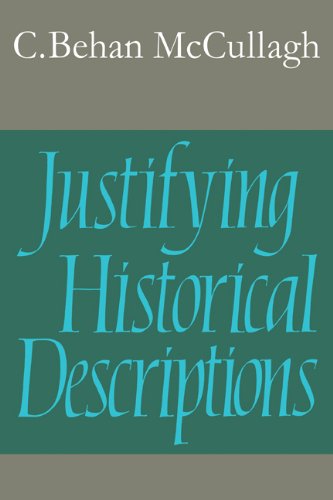
While Craig's position regarding the use of Bayes' Theorem has evolved over the years, to my knowledge one thing which has not changed is his reliance upon the work of historian C. Behan McCullagh.[1] Following McCullagh, Craig argues for R using an argument pattern called "inference to the best explanation" (IBE).[2] In this post, I will argue the following three points contra Craig. First, Bayes' Theorem is the foundation for logically correct arguments for any historical hypotheses. Second, neither McCullagh's IBE criteria nor Craig's restatement of them are sufficiently clear to enable a rigorous assessment of historical hypotheses, whereas the Bayesian approach avoids these problems. Third, Craig's defense of R fails to establish that the alleged event is more probable than not.

Saturday, August 12, 2023

Divine Nature Theory vs. Abstract Objects

Plato holding his Timaeus, detail from the Vatican fresco The School of Athens
Source: Web Gallery of Art; License: Public Domain


According to what I call the "Divine Nature Theory" of axiology or value (hereafter, DNT-A), value is grounded in God's nature. In contrast, moral anti-reductionism (usually called "ethical non-naturalism") says that moral value is grounded in sui generis, non-natural properties.

What is the advantage of DNT-A over moral anti-reductionism?  According to DNT-A, God’s nature, not God, is the source of moral value.  But what is the distinction between God and His nature?  God’s nature is simply the collection of God’s properties or attributes (e.g., omniscience, omnipotence, etc.).  But if that is the case, then why do we need God in order for moral value to supervene on one or more of such properties?  Or to put the point differently, why must those properties be instantiated in the person of God in order for the supervenience relationship to hold? Why can't they just exist as abstract properties? And if such properties do not need to be instantiated in the person of God, then what is the advantage of the divine nature theory over moral anti-reductionism?

Friday, August 11, 2023

Is the Combination of Atheism and Moral Obligation a Contradiction?


An Impossible (or Penrose) Triangle
Source: OpenClipArt; License: CC 

Three Types of Contradictions

Writing in 1955, the late Oxford don J.L. Mackie claimed that evil is logically inconsistent with God’s existence.

In its simplest form the problem is this: God is omnipotent; God is wholly good; and yet evil exists. There seems to be some contradiction between these three propositions, so that if any two of them were true the third would be false. But at the same time all three are essential parts of most theological positions: the theologian, it seems, at once must adhere and cannot consistently adhere to all three.[1]

Consider the following set of propositions: {God is omnipotent; God is wholly good; evil exists}. Mackie claimed that the set is somehow contradictory. But how?

Thursday, August 10, 2023

S.E. Cupp: Trump Has Broken American Evangelical Christianity

 LINK

Pro-God Atheism

For many former theists-turned-atheists, the loss of belief in God is a source of sadness. Consider these words from Christian-turned-atheist philosopher J.L. Schellenberg, taken from the conclusion of his landmark book, Divine Hiddenness and Human Reason (Cornell University Press, 1993).


P.S. Now ask yourself: how often do you find atheist-turned-theist philosophers writing a book defending some argument for God's existence, such that the book's conclusion expresses the hope that other people will be able to refute his or her argument for God?


Wednesday, August 09, 2023

Atheism and the Laws of Logic

Daniel (@DarwinToJesus) recently tweeted the following:

Monday, August 07, 2023

Theistic vs. Naturalistic Grounding of Moral Value


Seth Dillon, the CEO of The Babylon Bee, recently tweeted the following:

Sunday, August 06, 2023

New Paper Refuting Anscombe's "Modern Moral Philosophy"


Terence Irwin Elizabeth Anscombe


Irwin, T. The Philosophy and History of the Moral ‘Ought’: Some of Anscombe’s Objections. Ethic Theory Moral Prac (2023). https://doi.org/10.1007/s10677-023-10398-w

Abstract: According to G.E.M Anscombe’s paper ‘Modern Moral Philosophy’, modern moral philosophy has introduced a spurious concept of moral obligation, and has therefore made a mistake that the Greeks, and Aristotle in particular, avoided. Anscombe argues that the modern concepts of obligation, duty, and the moral ‘ought’ are the remnants of an earlier, but post-Aristotelian conception of ethics, and that they ought to be abandoned. An examination of Anscombe’s historical and philosophical claims shows that we have no reason to take them seriously. In particular, they rest on a misinterpretation of Scholastic views on ‘ought’ and obligation.

Tuesday, August 01, 2023

The Pragmatic Inconsistency of Responding to Nihilism with Despair


(1) Necessarily, if metaethical nihilism is true, then nothing matters.

(2) Responding with despair to the (supposed) truth of metaethical nihilism presupposes the falsity of metaethical nihilism.

Therefore:

(3) If one responds with despair to the (supposed) truth of metaethical nihilism, then it is true that nothing matters and it is false that nothing matters. [From 1-2]

Therefore:

(4) It is impossible to consistently respond with despair to metaethical nihilism. [From 3 and LNC]


They key insight of this argument is that if metaethical nihilism is true, then literally nothing, including metaethical nihilism itself, matters.

Thursday, July 27, 2023

Draft Essay: Naturalism, Theism, Badness, and Moral Law: A Critique of Ravi Zacharias


Overview:
1: Introduction
2: Logical Arguments from Evil
(a) Historical Context 
(b) Zacharias's Framing of the Problem of Evil
3: Zacharias's "Work of God" Theodicy
4: Changing the Subject: Morality Without God
(a) Do Atheists Who Run An Argument from 'Evil' Contradict Themselves?
(b) Quote-Mining Atheists Who Reject Objective Morality
(c) Bogus Appeals to Authority Aside, Do Russell, Mackie, and Dawkins Have Good Arguments?

Wednesday, July 19, 2023

Empathy and Apathy: An Evidential Problem for Theists

Serial killer Ted Bundy
Image Source: Florida Memory Project; License: Public Domain


1. Definitions

Following Paul Draper, I'm going to define my terms as follows.[1]

By "naturalism," I mean the view that the physical exists and, if the mental exists, the physical explains why the mental exists.  If naturalism is true, then there are no purely mental beings which can exist apart from a physical body and so there is no God or any person or being much like God.

By "supernaturalism," I mean the view that the mental exists and, if the physical exists, the mental explains why anything physical exists.  If supernaturalism is true, then there is no purely physical matter which can exist without some sort of ultimate mental creator. "Personal supernaturalism" is a type of supernaturalism; it adds on the claims that one or more personal mental entities exist and, if a physical world exists, it or they produced the physical world for a purpose. "Theism" is a type of personal supernaturalism; it adds on the claim that there is just one mental entity, God, who is all-powerful, all-knowing, and morally perfect. 

"Otherism" is a catch-all category. It says that both naturalism and supernaturalism are false. 

Monday, July 17, 2023

The Divine-vs.-Human Argument against Christianity


1. If Christianity were true, then Christ is divine. [Given]

2. If Christianity were true, then Christ is human. [Given]

3. If Christ is divine, then Christ is immutable. [1: divine nature entails immutability]

4. If Christ is human, then Christ is mutable. [2: human nature entails mutability]

Therefore:

5. If Christianity were true, then it would be true that Christ is immutable and it would be false that Christ is immutable. [From 1-4]

Therefore:

6. It is impossible for Christianity to be true. [From 5 by the law of noncontradiction]


Sunday, July 16, 2023

Assessing the Transcendence-vs.-Personhood Argument for the Impossibility of God


Source: Alchetron

In this post, I want to assess an argument for atheism called the Transcendence-vs.-Personhood Argument (hereafter, "TvP Argument"). The first section is an exposition of the argument as formulated by Theodore Drange. The second section is a partial assessment of the argument. The work of William Lane Craig appears prominently in this section. Craig is a highly regarded philosopher of time and philosopher of religion who has written extensively on the relationship between God and time. He is also, of course, a theist. Thus, his work on divine eternity provides a useful "test case" for the TvP Argument. 

Thursday, July 13, 2023

Paul Davies' Compound Argument against Timeless and Temporal Concepts of God


Credit: Christopher Michel; License: CC BY-SA 4.0


In his 1983 book, God and the New Physics, Paul Davies writes:

Christians believe that God is eternal. The word ‘eternal’ has, however, been used to mean two rather different things. In the simpler version, eternal means everlasting, or existing without beginning or end for an infinite duration. There are grave objections to such an idea of God, however. A God who is in time is subject to change. But what causes that change? If God is the cause of all existing things (as the cosmological argument of Chapter 3 suggests), then does it make sense to talk about that ultimate cause itself changing?

In the earlier chapters we have seen how time is not simply there, but is itself part of the physical universe. It is ‘elastic’ and can stretch or shrink according to well-defined mathematical laws which depend on the behaviour of matter. Also, time is closely linked to space, and space and time together express the operation of the gravitational field. In short, time is involved in all the grubby details of physical processes just as much as matter. Time is not a divine quality, but can be altered, physically, even by human manipulation. A God who is in time is, therefore, in some sense caught up in the operation of the physical universe. Indeed, it is quite likely that time will cease to exist at some stage in the future (as we shall see in Chapter 15). In that case God's own position is obviously insecure. Clearly, God cannot be omnipotent if he is subject to the physics of time, nor can he be considered the creator of the universe if he did not create time. In fact, because time and space are inseparable, a God who did not create time, created space neither. But as we have seen, once spacetime existed, the appearance of matter and order in the universe could have occurred automatically as the result of perfectly natural activity. Thus, many would argue that God is not really needed as a creator at all except to create time (strictly, spacetime). 

So we are led to the other meaning of the word eternal — ‘timeless’....

A timeless God is free of the problems mentioned above, but suffers from the shortcomings already discussed on page 38. He cannot be a personal God who thinks, converses, feels, plans, and so on for these are all temporal activities. It is hard to see how a timeless God can act at all in time (although it has been claimed that this is not impossible). We have also seen how the sense of the existence of the self is intimately associated with the experience of a time-flow. A timeless God could not be considered a ‘person’ or individual in any sense that we know. Misgivings of this score have led a number of modern theologians to reject this view of an eternal God. Paul Tillich writes: ‘If we call God a living God, we affirm that he includes temporality and with this a relation to the modes of time.’ 3 The same sentiment is echoed by Karl Barth: ‘Without God's complete temporality the content of the Christian message has no shape.’

There is thus a grave and fundamental difficulty in reconciling all the traditional attributes of God. Modern physics, with its discovery of the mutability of time, drives a wedge between God's omnipotence and the existence of his personality. It is difficult to argue that God can have both these qualities.[1]

Tuesday, July 11, 2023

Two Types of Weak Arguments for Theism: "God of the Gaps" vs. "Weak Naturalistic Explanations"

1. God of the Gaps Arguments

On my old team blog (Secular Outpost, which was migrated from Patheos and renamed as Secular Frontier), I proposed the following schema for God of the Gaps Arguments (hereafter, "Gap Arguments").

(1) There is some puzzling phenomenon P which science cannot at present explain.
(2) Theism does explain P.
Therefore:
(3) P is more likely on the assumption that God exists than on the assumption God does not exist.

Possible values for P may certainly include, but are not limited to, the origin of the universe, the life-permitting conditions of the universe, the origin of life itself (i.e., not evolution), the origin of consciousness, near-death experiences, and so forth. What is important to note here is that merely referring to alleged "hard" cases for naturalism is not a sufficient condition to make a theistic argument a Gap Argument. Rather, the following are necessary and sufficient conditions for a theistic argument to qualify as a Gap Argument: (a) the argument must refer to scientific ignorance; and (b) the argument must not include a premise about current knowledge (scientific or otherwise) which allegedly favors theism over naturalism. To see this, consider two versions of an argument from consciousness for theism.

Version 1: The Argument from Consciousness (Gap Version)

(1) Science cannot explain consciousness.
(2) Theism does explain consciousness.
Therefore:
(3) Consciousness is more likely on the assumption that God exists than on the assumption God does not exist. 

Version 2: The Argument from Consciousness (Non-Gap Version) 

(1) E ("Human consciousness exists") is known to be true, i.e., Pr(E) is close to 1.
(2) Source physicalism is not hopelessly intrinsically much more probable than theism, i.e., Pr(|N|) is not much greater than Pr(|T|).
(3) Human consciousness is antecedently more probable on the assumption that source physicalism is true than on the assumption that theism is true i.e., Pr(E | T & B) =1 > Pr(E | N & B).
Therefore:
(4) Other evidence held equal, N is probably false, i.e., Pr(N | B & E) < 1/2.

In version 2, premise (3) would then be supported by one or more arguments based on what we do know, rather than appealing to scientific ignorance.

2. Weak Naturalistic Explanations Arguments 

Weak Naturalism Explanation Arguments (hereafter, "Weak Explanation Arguments") are related to Gap Arguments, but represent a distinct type of argument. While the exact details differ, they have the following basic form.

(1) The evidence (E) regarding some known topic T is known to be true.
(2) Naturalistic explanations 1...n are weak explanations because they are ad hoc, have weak explanatory power, or both.
(3) Theism has great explanatory power. 
Therefore:
(4) Theism is true. 

Possible values for T may certainly include, but are not limited to, the origin of the universe, the life-permitting conditions of the universe, the origin of life itself (i.e., not evolution), the origin of consciousness, near-death experiences, the historicity of Jesus' resurrection, and so forth. What is important to note here is that merely referring to alleged "weak" naturalistic explanations is not a sufficient condition to make a theistic argument a Weak Explanation Argument. Rather, the following are necessary and sufficient conditions for a theistic argument to qualify as a Weak Explanation Argument: (a) the argument must refer to the weakness of naturalistic explanations; and (b) the argument must not include a premise about the (alleged) strength of the theistic explanation. To see this, consider two versions of an argument for the historicity of the Resurrection.

Again, let's compare and contrast two versions of an argument for the historicity of the Resurrection. 

Version 1: The Argument for the Resurrection (Weak Explanation Version)

(1) The evidence (E) relevant to the alleged Resurrection of Jesus is known to be true.
(2) Each of the traditional naturalistic explanations 1...n for E are weak explanations because they are ad hoc, have weak explanatory power, or both.
(3) The Resurrection theory is a strong explanation of the evidence.
Therefore:
(4) [probable] Jesus rose from the dead.

Version 2: The Argument for the Resurrection (Non-Weak Explanation Version)

(1) The evidence (E) relevant to the alleged Resurrection of Jesus is known to be true.
(2) Each of the traditional naturalistic explanations 1...n for E are weak explanations because they are ad hoc, have weak explanatory power, or both.
(3) The Resurrection theory is a strong explanation of the evidence because it is neither ad hoc nor has weak explanatory power.
Therefore:
(4) [probable] Jesus rose from the dead.

In version 1, the argument assesses traditional naturalistic explanations by considering their background probability and explanatory power, but does not consider the background probability of the Resurrection theory. In contrast, version 2 considers background probability and explanatory power of all explanations. N.B. I think even version 2 fails, but version 2 is better than version 1. Why does version 2 fail? I'll save that for another time.

Monday, July 10, 2023

Divine Simplicity vs Trinity


Source: AnonMoos; License: Public Domain


I know that Thomists have had about centuries to come up with responses, but it just occurred to me that it is far from obvious that divine simplicity is logically consistent with the Trinity. Not making an argument; rather, just a note for future research.


Atheism and Self-Deception


Source: WallPaper Flare


I’m sure I’m not the first person to notice this, but, in light of the frequent accusation that atheists are self-deceived, it is striking how common it is for atheists to be told to behave in ways that are self-deception (or what we might call "self-deception adjacent") to cultivate theistic belief.